OK Go Korea
Traditional Hanfu and Horseback Riding: A Misty Journey into Ancient China’s Aesthetic Landscapes 본문
Traditional Hanfu and Horseback Riding: A Misty Journey into Ancient China’s Aesthetic Landscapes
eternity1996@gmail.com 2026. 8. 3. 15:59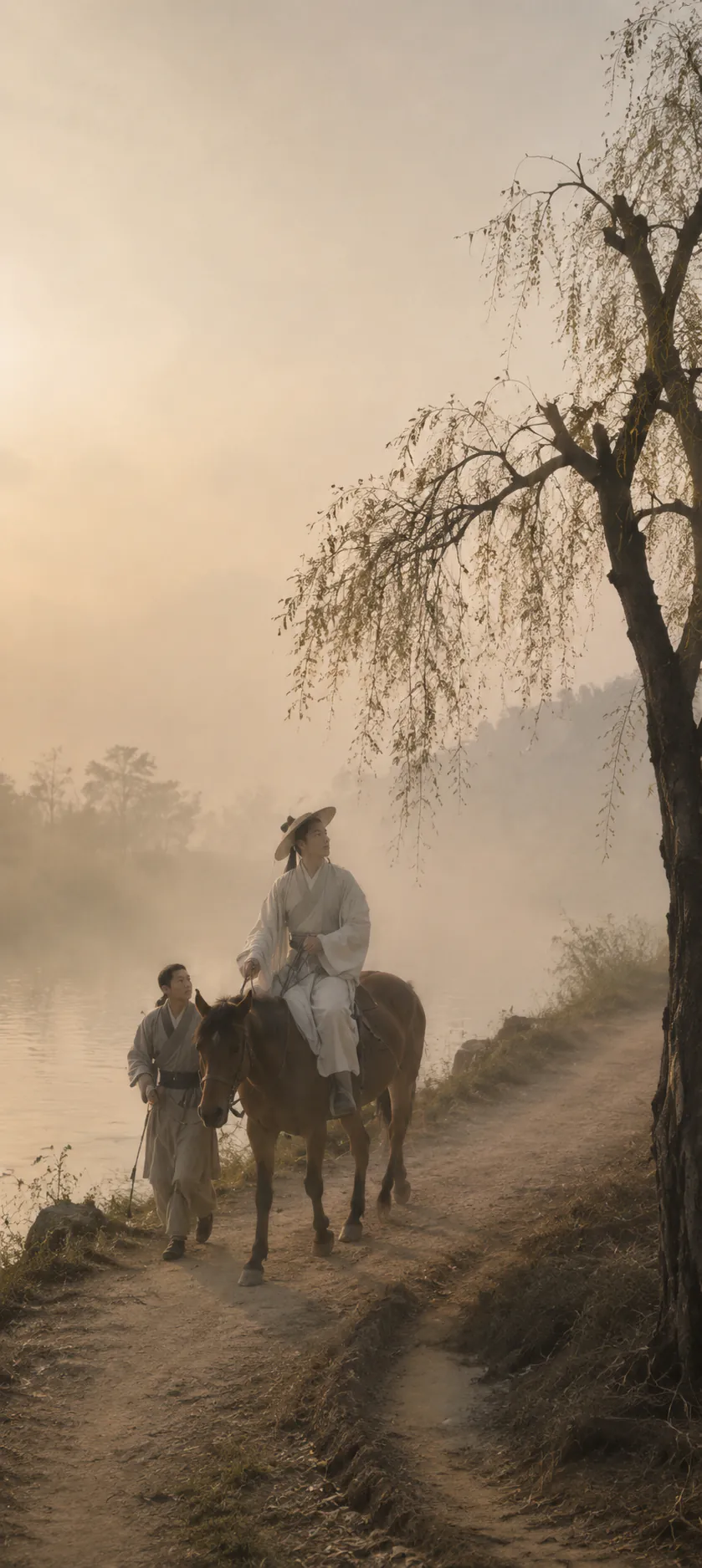
[한국어]
안개 낀 강변의 아침: 한 폭의 수묵화 같은 한국의 전통 풍경
이 사진은 마치 한국의 인기 있는 사극(Historical Drama) 속 한 장면이나, 조선 시대의 옛 그림을 그대로 옮겨놓은 듯한 아름답고 신비로운 분위기를 자아냅니다. 한국의 역사와 문화에 관심이 많은 분들을 위해 이 사진 속 풍경을 한국적인 관점에서 알기 쉽게 설명해 드립니다.
1. 선비(Seonbi)와 길잡이: 조선 시대의 여행 모습
사진 속 말에 올라탄 여유로운 인물과 그 옆에서 말을 끄는 인물의 모습은 한국 전통 사회의 전형적인 여행 방식을 보여줍니다.
선비(Seonbi): 말에 탄 사람은 한국의 전통적인 지식인 계층인 '선비' 또는 귀족 계층인 '양반'의 모습을 연상시킵니다. 맑은 색의 넉넉한 전통 의상(한복, Hanbok)을 입고 챙이 넓은 모자를 쓴 모습에서 학문을 수양하고 자연을 벗 삼는 고결한 선비의 기품이 느껴집니다.
동행하는 사람: 그 옆에서 봇짐을 메고 걷는 이는 선비의 먼 길을 돕는 길잡이나 수행원입니다. 과거 시험을 보러 한양(지금의 서울)으로 떠나거나, 아름다운 자연을 찾아 유람을 떠나는 옛 한국인들의 여정을 상상하게 합니다.
2. 수양버들과 흙길: 한국 서정 문학의 단골 배경
오른쪽에 길게 늘어진 나무는 물가에서 잘 자라는 '수양버들(Weeping Willow)'입니다.
한국의 옛 시조나 민요를 보면 강가에 늘어진 수양버들이 자주 등장합니다. 봄날의 부드러움이나 먼 길 떠나는 사람과의 아쉬운 이별을 상징하는 이 나무는, 굽이진 흙길과 어우러져 한국 특유의 소박하고 서정적인 자연미를 보여줍니다.
3. 물안개와 풍류(Pungnyu): 여백의 미학
이 사진의 가장 큰 매력은 전체를 감싸고 있는 짙은 안개입니다.
수묵화(Sumukhwa)의 느낌: 흑과 백의 붓놀림으로 그려낸 한국의 전통 수묵화처럼, 안개로 인해 배경이 흐릿해진 모습은 시각적인 쉼표를 제공합니다. 이를 한국 예술에서는 **'여백의 미(Beauty of Emptiness)'**라고 부릅니다. 모든 것을 꽉 채워 보여주지 않고 보는 사람의 상상력에 맡기는 아름다움입니다.
풍류(Pungnyu) 문화: 자연을 훼손하지 않고 자연 속으로 들어가 그 자체를 즐기고 예술로 승화시키는 한국 고유의 문화를 '풍류'라고 합니다. 고요한 강가의 물안개 속을 거니는 이들의 모습은 한국인들이 오래전부터 추구해 온 자연과 인간의 완벽한 조화(풍류)를 시각적으로 잘 전달하고 있습니다.
[English]
Morning by the Misty Riverside: A Traditional Korean Landscape Like an Ink-and-Wash Painting
This photo evokes a beautiful and mysterious atmosphere, as if a scene from a popular Korean historical drama or an old painting from the Joseon Dynasty has been brought to life. For those interested in Korean history and culture, here is an easy-to-understand explanation of the landscape in this photo from a Korean perspective.
1. Seonbi and the Guide: Traveling in the Joseon Dynasty
The relaxed figure riding the horse and the person leading it beside him illustrate a typical mode of travel in traditional Korean society.
Seonbi: The person on the horse is reminiscent of a 'Seonbi', the traditional Korean intellectual class, or a 'Yangban', the aristocratic class. Wearing loosely fitting traditional clothes (Hanbok) in light colors and a wide-brimmed hat, one can feel the noble dignity of a Seonbi who cultivates academics and befriends nature.
Companion: The person walking next to him carrying a bundle is a guide or attendant helping the Seonbi on his long journey. It makes one imagine the journey of ancient Koreans heading to Hanyang (now Seoul) to take the national civil service exam or traveling to seek out beautiful nature.
2. Weeping Willows and Dirt Paths: A Frequent Background in Korean Lyrical Literature
The tree with long, drooping branches on the right is a 'Weeping Willow', which grows well by the water.
In old Korean sijo (traditional poems) or folk songs, weeping willows hanging by the river frequently appear. Symbolizing the softness of spring days or the sorrowful parting with someone going on a long journey, this tree, combined with the winding dirt path, shows the simple and lyrical natural beauty unique to Korea.
3. Water Mist and Pungnyu: The Aesthetics of Emptiness
The greatest charm of this photo is the thick mist enveloping the entire scene.
The Feel of Sumukhwa (Ink-and-Wash Painting): Like a traditional Korean ink-and-wash painting drawn with black and white brushstrokes, the blurred background due to the mist provides a visual pause. In Korean art, this is called the 'Beauty of Emptiness'. It is the beauty of leaving things to the viewer's imagination rather than filling up the entire space.
Pungnyu Culture: The unique Korean culture of immersing oneself in nature without damaging it, enjoying it as it is, and elevating it into art is called 'Pungnyu'. The figures strolling through the water mist by the tranquil riverside visually convey the perfect harmony between nature and humanity (Pungnyu) that Koreans have pursued since ancient times.
[Español]
Mañana en la orilla del río cubierta de niebla: un paisaje tradicional coreano como una pintura a la aguada
Esta foto evoca una atmósfera hermosa y misteriosa, como si una escena de un popular drama histórico coreano (Historical Drama) o una pintura antigua de la dinastía Joseon hubiera cobrado vida. Para aquellos interesados en la historia y la cultura coreanas, aquí hay una explicación fácil de entender del paisaje en esta foto desde una perspectiva coreana.
1. Seonbi y el guía: la forma de viajar en la dinastía Joseon
La figura relajada montada a caballo y la persona que lo guía a su lado ilustran un modo típico de viaje en la sociedad tradicional coreana.
Seonbi: La persona a caballo recuerda a un 'Seonbi', la clase intelectual tradicional coreana, o un 'Yangban', la clase aristocrática. Con ropas tradicionales holgadas (Hanbok) de colores claros y un sombrero de ala ancha, se puede sentir la noble dignidad de un Seonbi que cultiva el aprendizaje y se hace amigo de la naturaleza.
Acompañante: La persona que camina a su lado con un fardo es un guía o asistente que ayuda al Seonbi en su largo viaje. Hace imaginar el viaje de los antiguos coreanos que se dirigían a Hanyang (actual Seúl) para realizar el examen de servicio civil o que viajaban para buscar la belleza de la naturaleza.
2. Sauces llorones y caminos de tierra: un escenario frecuente en la literatura lírica coreana
El árbol con ramas largas y caídas a la derecha es un 'sauce llorón' (Weeping Willow), que crece muy bien junto al agua.
En los antiguos sijo (poemas tradicionales) o canciones folclóricas coreanas, los sauces llorones que cuelgan junto al río aparecen con frecuencia. Simbolizando la suavidad de los días de primavera o la triste despedida de alguien que emprende un largo viaje, este árbol, combinado con el sinuoso camino de tierra, muestra la belleza natural simple y lírica exclusiva de Corea.
3. Niebla de agua y Pungnyu: la estética del vacío
El mayor encanto de esta foto es la espesa niebla que envuelve toda la escena.
La sensación de Sumukhwa (pintura a la aguada): Al igual que una pintura tradicional coreana a la aguada dibujada con pinceladas blancas y negras, el fondo borroso debido a la niebla proporciona una pausa visual. En el arte coreano, a esto se le llama 'Belleza del vacío' (Beauty of Emptiness). Es la belleza de dejar cosas a la imaginación del espectador en lugar de llenar todo el espacio.
Cultura Pungnyu: La cultura única coreana de sumergirse en la naturaleza sin dañarla, disfrutarla tal como es y elevarla a la categoría de arte se llama 'Pungnyu'. Las figuras que pasean a través de la niebla de agua en la tranquila orilla del río transmiten visualmente la perfecta armonía entre la naturaleza y la humanidad (Pungnyu) que los coreanos han buscado desde la antigüedad.
[Français]
Matin sur la rive brumeuse : Un paysage traditionnel coréen tel une peinture à l'encre et à l'eau
Cette photo évoque une atmosphère magnifique et mystérieuse, comme si une scène d'un drame historique coréen populaire (Historical Drama) ou une peinture ancienne de la dynastie Joseon avait pris vie. Pour ceux qui s'intéressent à l'histoire et à la culture coréennes, voici une explication facile à comprendre du paysage de cette photo d'un point de vue coréen.
1. Seonbi et le guide : Voyager sous la dynastie Joseon
La figure détendue à cheval et la personne qui mène la monture à ses côtés illustrent un mode de voyage typique de la société coréenne traditionnelle.
Seonbi : La personne à cheval rappelle un « Seonbi », la classe intellectuelle coréenne traditionnelle, ou un « Yangban », la classe aristocratique. Portant des vêtements traditionnels amples (Hanbok) de couleurs claires et un chapeau à larges bords, on ressent la noble dignité d'un Seonbi qui cultive le savoir et se lie d'amitié avec la nature.
L'accompagnateur : La personne qui marche à côté avec un baluchon est un guide ou un serviteur aidant le Seonbi dans son long voyage. Cela fait imaginer le voyage des anciens Coréens se rendant à Hanyang (l'actuelle Séoul) pour passer l'examen de la fonction publique, ou voyageant pour rechercher la beauté de la nature.
2. Saules pleureurs et chemins de terre : Un décor fréquent de la littérature lyrique coréenne
L'arbre aux longues branches pendantes sur la droite est un « saule pleureur » (Weeping Willow), qui pousse bien au bord de l'eau.
Dans les anciens sijo (poèmes traditionnels) ou chansons folkloriques coréennes, les saules pleureurs suspendus au bord de la rivière apparaissent fréquemment. Symbolisant la douceur des jours de printemps ou la triste séparation avec quelqu'un partant pour un long voyage, cet arbre, combiné au chemin de terre sinueux, montre la beauté naturelle simple et lyrique propre à la Corée.
3. Brume d'eau et Pungnyu : L'esthétique du vide
Le plus grand charme de cette photo est la brume épaisse qui enveloppe toute la scène.
La sensation du Sumukhwa (peinture à l'encre et à l'eau) : À l'image d'une peinture traditionnelle coréenne à l'encre dessinée avec des coups de pinceau noirs et blancs, l'arrière-plan flou en raison de la brume offre une pause visuelle. Dans l'art coréen, on appelle cela la « Beauté du vide » (Beauty of Emptiness). C'est la beauté de laisser place à l'imagination du spectateur plutôt que de tout remplir.
La culture Pungnyu : La culture unique coréenne consistant à s'immerger dans la nature sans la détruire, à en profiter telle qu'elle est et à l'élever au rang d'art s'appelle « Pungnyu ». Les personnages se promenant à travers la brume sur la rive tranquille transmettent visuellement l'harmonie parfaite entre la nature et l'humanité (Pungnyu) que les Coréens recherchent depuis les temps anciens.
[Deutsch]
Morgen am nebligen Flussufer: Eine traditionelle koreanische Landschaft wie eine Tuschemalerei
Dieses Foto ruft eine wunderschöne und mysteriöse Atmosphäre hervor, als ob eine Szene aus einem beliebten koreanischen Historiendrama (Historical Drama) oder ein altes Gemälde aus der Joseon-Dynastie zum Leben erweckt worden wäre. Für diejenigen, die sich für die koreanische Geschichte und Kultur interessieren, ist hier eine leicht verständliche Erklärung der Landschaft auf diesem Foto aus koreanischer Perspektive.
1. Seonbi und der Führer: Reisen in der Joseon-Dynastie
Die entspannte Gestalt auf dem Pferd und die Person, die es daneben führt, veranschaulichen eine typische Reiseart in der traditionellen koreanischen Gesellschaft.
Seonbi: Die Person auf dem Pferd erinnert an einen „Seonbi“, die traditionelle koreanische Intellektuellenklasse, oder an einen „Yangban“, die aristokratische Klasse. In locker sitzender traditioneller Kleidung (Hanbok) in hellen Farben und einem Hut mit breiter Krempe spürt man die edle Würde eines Seonbi, der die Wissenschaft pflegt und sich mit der Natur anfreundet.
Der Begleiter: Die Person, die mit einem Bündel daneben geht, ist ein Führer oder Diener, der dem Seonbi auf seiner langen Reise hilft. Man stellt sich die Reise der alten Koreaner vor, die nach Hanyang (dem heutigen Seoul) reisten, um die nationale Beamtenprüfung abzulegen, oder reisten, um die wunderschöne Natur aufzusuchen.
2. Trauerweiden und Feldwege: Ein häufiger Hintergrund in der koreanischen lyrischen Literatur
Der Baum mit den langen, herabhängenden Ästen auf der rechten Seite ist eine „Trauerweide“ (Weeping Willow), die gut am Wasser wächst.
In alten koreanischen Sijo (traditionellen Gedichten) oder Volksliedern tauchen häufig Trauerweiden auf, die am Fluss hängen. Dieser Baum symbolisiert die Weichheit von Frühlingstagen oder den traurigen Abschied von jemandem, der auf eine lange Reise geht, und zeigt in Kombination mit dem gewundenen Feldweg die für Korea einzigartige einfache und lyrische Naturschönheit.
3. Wassernebel und Pungnyu: Die Ästhetik der Leere
Der größte Charme dieses Fotos ist der dichte Nebel, der die gesamte Szene einhüllt.
Das Gefühl von Sumukhwa (Tuschemalerei): Wie eine traditionelle koreanische Tuschemalerei, die mit schwarzen und weißen Pinselstrichen gezeichnet wurde, bietet der durch den Nebel verschwommene Hintergrund eine visuelle Pause. In der koreanischen Kunst nennt man dies die „Schönheit der Leere“ (Beauty of Emptiness). Es ist die Schönheit, den Dingen die Vorstellungskraft des Betrachters zu überlassen, anstatt den ganzen Raum auszufüllen.
Pungnyu-Kultur: Die einzigartige koreanische Kultur, in die Natur einzutauchen, ohne sie zu zerstören, sie so zu genießen, wie sie ist, und sie zur Kunst zu erheben, wird „Pungnyu“ genannt. Die Figuren, die durch den Wassernebel am ruhigen Flussufer schlendern, vermitteln visuell die perfekte Harmonie zwischen Natur und Menschlichkeit (Pungnyu), nach der Koreaner seit der Antike streben.


