Gyeonghoeru Pavilion Night View: A Stunning Landmark in Gyeongbokgung Palace, Seoul
[English]
🌙 Walking the Night in Seoul: The Mirror-like Night View of Gyeonghoeru Pavilion at Gyeongbokgung Palace
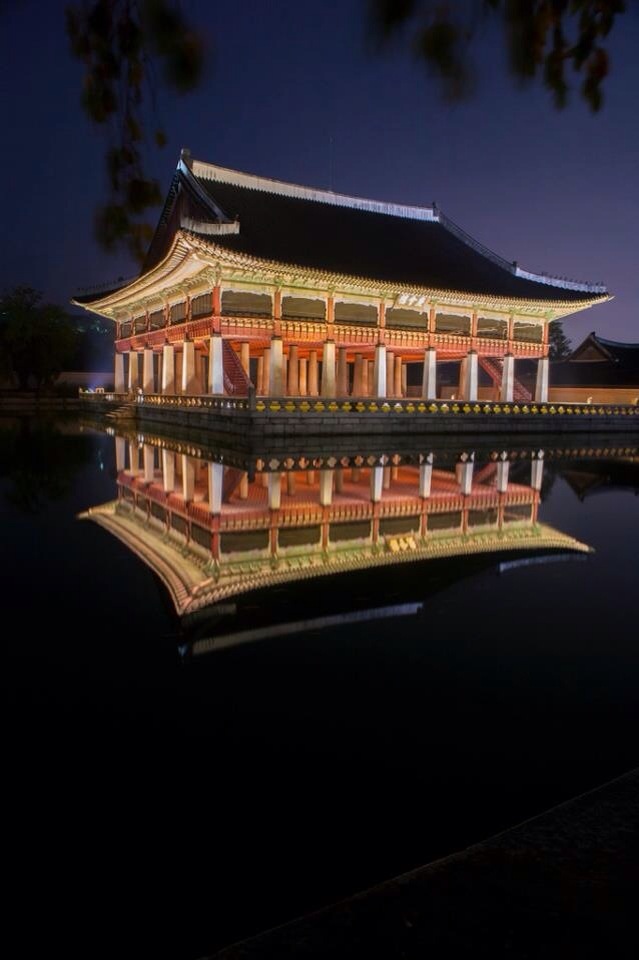
The beautiful architecture in the photo is 'Gyeonghoeru Pavilion' at Gyeongbokgung Palace, located in the heart of Seoul, South Korea. It boasts the grandest and most beautiful scenery even among Korea's representative traditional palaces. For those interested in the history and beauty of Korea, here are three captivating points about the charm captured in this photo.
1. A Royal Banquet Hall Built on Water
Gyeonghoeru is not an ordinary building, but a two-story pavilion built over a massive artificial pond. During the Joseon Dynasty (1392–1910), this was where the king held grand banquets for major national celebrations or to welcome important foreign diplomatic envoys. If you had visited Korea as an important guest hundreds of years ago, you would have been welcomed right here with brilliant traditional music, dance, and delicious royal court cuisine.
2. Perfect Mirror-like Symmetry and Harmony with Nature
The greatest charm of this photo is the building reflecting perfectly like a mirror on the calm ripples under the dark night sky (décalcomanie). Traditional Korean architecture (Hanok) did not seek to destroy or overwhelm nature; rather, it considered "the harmonious blending of nature, buildings, and people as one" to be the most beautiful. The reflection of Gyeonghoeru on the water visually demonstrates this unique nature-friendly aesthetic of Korea in the best possible way. The gently upward-sweeping curves of the roof (eaves) and the wooden pillars bathed in warm lighting create perfect harmony with the water's background.
3. Time Travel in the City Center (Night Viewing)
Today, this location is a beloved nightscape destination for numerous foreign tourists and Koreans alike. Having such a tranquil and mysterious 600-year-old landscape remain in the middle of downtown Seoul, surrounded by tall modern buildings, offers a very special experience. Normally, it is only open for daytime viewing, but the 'Gyeongbokgung Palace Special Night Viewing' event is held during certain periods every spring and autumn. If you visit Korea during this time, you can stroll through the romantic night palace in the photo and feel as if you have become the main character in a Korean historical drama.
[Español]
🌙 Caminando por la noche de Seúl: La vista nocturna, brillante como un espejo, del Pabellón Gyeonghoeru en el Palacio Gyeongbokgung
La hermosa arquitectura de la foto es el 'Pabellón Gyeonghoeru' en el Palacio Gyeongbokgung, situado en el corazón de Seúl, Corea del Sur. Cuenta con el paisaje más grandioso y hermoso incluso entre los palacios tradicionales representativos de Corea. Para aquellos interesados en la historia y la belleza de Corea, les explicamos el encanto de esta foto en tres puntos.
1. Un salón de banquetes real construido sobre el agua
Gyeonghoeru no es un edificio común, sino un pabellón de dos pisos construido sobre un enorme estanque artificial. Durante la Dinastía Joseon (1392-1910), este era el lugar donde el rey celebraba grandes banquetes por eventos nacionales importantes o para dar la bienvenida a enviados diplomáticos extranjeros de alto rango. Si hubieras visitado Corea como un invitado importante hace cientos de años, habrías sido recibido en este mismo lugar con brillante música y danza tradicionales, además de una deliciosa comida de la corte real.
2. Perfecta simetría como un espejo, armonía con la naturaleza
El mayor encanto de esta foto es cómo el edificio se refleja perfectamente como un espejo (decalcomanía) sobre las aguas tranquilas bajo el oscuro cielo nocturno. La arquitectura tradicional coreana (Hanok) no buscaba destruir o abrumar la naturaleza; más bien, consideraba que "la combinación armónica de la naturaleza, los edificios y las personas en uno solo" era lo más hermoso. El reflejo de Gyeonghoeru en el agua muestra visualmente esta estética ecológica única de Corea de la mejor manera posible. Las curvas del techo (aleros) que se extienden suavemente hacia el cielo y los pilares de madera bañados por una luz cálida crean una armonía perfecta con el fondo del agua.
3. Un viaje en el tiempo en el centro de la ciudad (Visita nocturna)
Hoy en día, este lugar es un destino nocturno muy querido por numerosos turistas extranjeros y coreanos. El hecho de que un paisaje de 600 años de antigüedad tan tranquilo y misterioso permanezca en medio del centro de Seúl, rodeado de altos edificios modernos, ofrece una experiencia muy especial. Normalmente, solo está abierto para visitas diurnas, pero durante ciertos períodos cada primavera y otoño, se lleva a cabo el evento 'Visita Nocturna Especial del Palacio Gyeongbokgung'. Si visitas Corea en esta época, podrás pasear por el romántico palacio nocturno de la foto y sentirte como si fueras el protagonista de un drama histórico coreano.
[Français]
🌙 Une nuit à Séoul : La vue nocturne scintillante comme un miroir du pavillon Gyeonghoeru au palais de Gyeongbokgung
La magnifique architecture sur la photo est le 'Pavillon Gyeonghoeru' au Palais de Gyeongbokgung, situé au cœur de Séoul, en Corée du Sud. Il offre le paysage le plus grandiose et le plus beau, même parmi les palais traditionnels représentatifs de la Corée. Pour ceux qui s'intéressent à l'histoire et à la beauté de la Corée, voici les trois points charmants que révèle cette photo.
1. Une salle de banquet royale construite sur l'eau
Gyeonghoeru n'est pas un bâtiment ordinaire, mais un pavillon à deux étages construit sur un immense étang artificiel. Pendant la dynastie Joseon (1392–1910), c'était l'endroit où le roi organisait de grands banquets lors de célébrations nationales importantes ou pour accueillir des émissaires diplomatiques étrangers de haut rang. Si vous aviez visité la Corée en tant qu'invité de marque il y a plusieurs centaines d'années, vous auriez été accueilli à cet endroit précis avec des musiques et des danses traditionnelles éblouissantes, ainsi que de délicieux mets de la cour royale.
2. Une symétrie parfaite tel un miroir, l'harmonie avec la nature
Le plus grand charme de cette photo est le bâtiment qui se reflète parfaitement comme un miroir (décalcomanie) sur les ondulations calmes sous le ciel nocturne sombre. L'architecture traditionnelle coréenne (Hanok) ne cherchait ni à détruire ni à dominer la nature ; elle considérait plutôt que "l'harmonie entre la nature, les bâtiments et les personnes ne faisant qu'un" était ce qu'il y a de plus beau. Le reflet de Gyeonghoeru sur l'eau illustre visuellement à la perfection cette esthétique écologique propre à la Corée. Les courbes du toit (avant-toits) s'étirant doucement vers le ciel et les piliers en bois baignés d'une lumière chaude créent une harmonie parfaite avec l'arrière-plan aquatique.
3. Un voyage dans le temps au cœur de la ville (Visite nocturne)
Aujourd'hui, cet endroit est une destination nocturne très appréciée de nombreux touristes étrangers et coréens. La présence d'un paysage vieux de 600 ans si paisible et mystérieux en plein centre-ville de Séoul, entouré de hauts gratte-ciel modernes, offre une expérience tout à fait unique. Habituellement, le site n'est ouvert qu'en journée, mais chaque printemps et automne, lors de périodes spécifiques, a lieu l'événement 'Visite nocturne spéciale du palais de Gyeongbokgung'. Si vous visitez la Corée à cette période, vous pourrez vous promener dans le palais romantique de la nuit présenté sur la photo, et avoir l'impression d'être le héros d'un drame historique coréen.
[Deutsch]
🌙 Ein Nachtspaziergang in Seoul: Die spiegelnde Nachtansicht des Gyeonghoeru-Pavillons im Gyeongbokgung-Palast
Die wunderschöne Architektur auf dem Foto ist der 'Gyeonghoeru-Pavillon' im Gyeongbokgung-Palast, gelegen im Herzen von Seoul, Südkorea. Er bietet die großartigste und schönste Landschaft selbst unter den repräsentativen traditionellen Palästen Koreas. Für alle, die sich für die Geschichte und Schönheit Koreas interessieren, erklären wir den Charme dieses Fotos in drei Punkten.
1. Ein königlicher Bankettsaal auf dem Wasser
Gyeonghoeru ist kein gewöhnliches Gebäude, sondern ein zweistöckiger Pavillon, der über einem riesigen künstlichen Teich errichtet wurde. Während der Joseon-Dynastie (1392–1910) veranstaltete der König hier große Bankette bei wichtigen nationalen Feierlichkeiten oder um bedeutende ausländische diplomatische Gesandte willkommen zu heißen. Wenn Sie Korea vor hunderten von Jahren als wichtiger Gast besucht hätten, wären Sie genau an diesem Ort mit brillanter traditioneller Musik und Tanz sowie köstlicher königlicher Hofküche empfangen worden.
2. Perfekte spiegelgleiche Symmetrie und Harmonie mit der Natur
Der größte Charme dieses Fotos besteht darin, wie sich das Gebäude unter dem dunklen Nachthimmel perfekt wie ein Spiegel (Abziehbild) auf den ruhigen Wasserwellen abzeichnet. Die traditionelle koreanische Architektur (Hanok) versuchte nicht, die Natur zu zerstören oder zu überwältigen; vielmehr sah sie „das harmonische Verschmelzen von Natur, Gebäuden und Menschen zu einer Einheit“ als das Schönste an. Die Spiegelung von Gyeonghoeru auf dem Wasser veranschaulicht diese einzigartige, naturfreundliche Ästhetik Koreas visuell auf beste Weise. Die sanft zum Himmel aufstrebenden Kurven des Daches (Dachüberstände) und die in warmes Licht getauchten Holzpfeiler bilden eine perfekte Harmonie mit dem Hintergrund des Wassers.
3. Zeitreise mitten in der Stadt (Nächtliche Besichtigung)
Heute ist dieser Ort ein beliebtes Ausflugsziel bei Nacht für zahlreiche ausländische Touristen und Koreaner. Dass eine so friedliche und geheimnisvolle, 600 Jahre alte Landschaft inmitten der von hohen modernen Wolkenkratzern geprägten Innenstadt von Seoul erhalten geblieben ist, bietet ein ganz besonderes Erlebnis. Normalerweise kann der Palast nur tagsüber besichtigt werden, aber in bestimmten Zeiträumen im Frühling und Herbst findet die Veranstaltung 'Gyeongbokgung-Palast Spezielle Nachtbesichtigung' statt. Wenn Sie Korea in dieser Zeit besuchen, können Sie selbst durch den romantischen nächtlichen Palast auf dem Foto schlendern und sich fühlen, als wären Sie die Hauptfigur in einem koreanischen historischen Drama.